
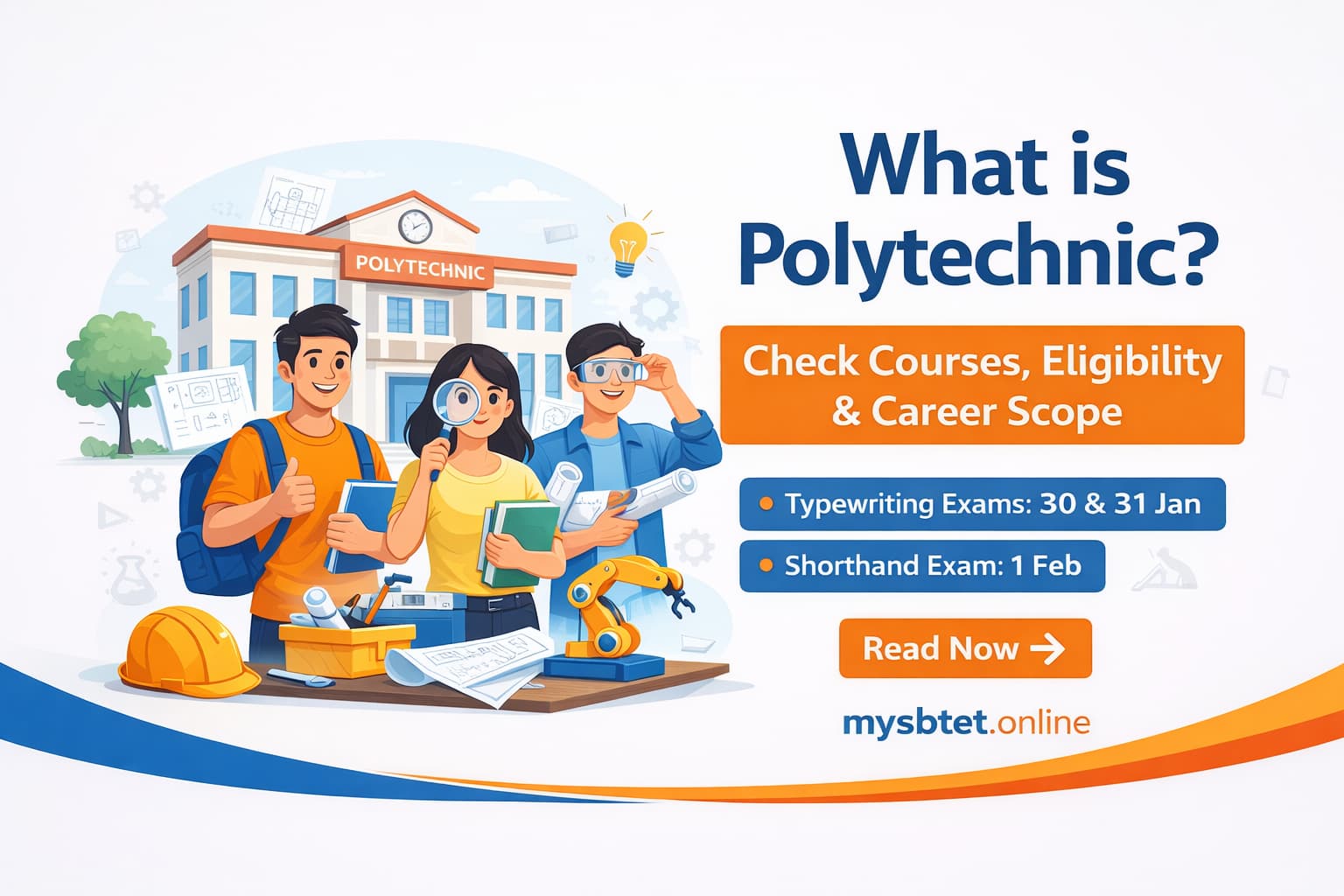
If you’ve just finished your 10th standard and are searching for options beyond regular intermediate education, you’ve probably heard about polytechnic and want to know what is polytechnic? Polytechnic courses are practical and skill-focused. these courses helps students learn technical subjects and get job-ready much earlier compared to traditional courses like inter or ITI. Polytechnic education is designed for students who want to start working sooner or build a strong foundation before pursuing engineering.
Table of Contents
What is Polytechnic?
The word polytechnic comes from Greek, where “poly” means many and “technic” refers to skills. So, polytechnic literally means an institution that teaches multiple technical skills. In India, both govt and private polytechnic colleges offer diploma-level education in engineering and other technical fields.
Polytechnic education is different from regular degree courses. these diploma courses focuses more on practical training and skill development rather than heavy theory like regular secondary education. The idea is to prepare students for real-world jobs by teaching them how things actually work in industries and workshops.. as part of the curriculum, sbtet made a compulsory 6 month industrial training for final year polytechnic students.
Duration of Polytechnic Courses
All the regular polytechnic courses like EEE,ECE,CME,MECH,CIVIL last for 3 years after 10th standard. but the intermediate students who joined through lateral entry can enter directly into the second year , which makes it a 2-year course. The entire programme is structured to give you enough time to learn, practice, and gain confidence in your chosen engineering field.
What Are Polytechnic Courses?
Polytechnic Courses are provided by state board of technical education and training (SBTET) .Polytechnic colleges offer a wide range of diploma courses, broadly divided into two categories: engineering and non-engineering.
Engineering Diploma Courses
These are the most popular polytechnic courses and cover various branches of engineering. Some common examples offered by SBTET:
- Civil Engineering
- Mechanical Engineering
- Electrical Engineering
- Electronics and Communication Engineering
- Computer Engineering
- Automobile Engineering
- Chemical Engineering
- Mining Engineering
- Aeronautical Engineering
- Petroleum Engineering
- Instrumentation Engineering
Each branch teaches you specific technical skills related to that engineering field. For example, civil engineering students learn about construction, surveying, and building design, while computer engineering students focus on programming, software, and hardware basics.
Non-Engineering Diploma Courses
Apart from engineering, polytechnic colleges also offer wide range of diploma courses in non-engineering fields such as:
- Commercial Practice
- Pharmacy
- Hotel Management
- Fashion Technology
- Architecture Assistantship
These courses are perfectly suitable for students who are interested in technical education but are not interested in core engineering subjects. These diploma courses open doors to different career paths after the course completion.
Is Polytechnic and Diploma the Same?
This is a common question arises for many students, and the answer is both yes and no, depending on how you look at it.
Polytechnic refers to the institution or college where diploma courses are offered. Diploma, on the other hand, it is the certificate or qualification you receive after completing the course. So technically, we can conclude polytechnic is the place, and diploma is the degree.For more details related to polytechnic diploma refer our website.
To put explain it simply: all polytechnic courses are diploma courses, but not all diploma courses are offered only by polytechnic colleges. Some universities and private institutions also offer diplomas. But when you’re talking about technical diploma education after 10th or 12th standard it’s usually through a polytechnic college.
Eligibility for Polytechnic Courses
Getting into a polytechnic course is fairly straightforward, and the eligibility criteria are simple.
Minimum Qualification Required
To join a polytechnic course you have to appear for the polycet exam conducted by SBTET. To apply for polycet, you need to have completed your SSC (Class 10) from a recognized board. That’s the basic requirement for most diploma courses. for the students who have completed their intermediate education and want to join diploma course , they need to have studied relevant subjects like Mathematics, Physics, and Chemistry in their 12th standard.
Age Requirement
There’s no strict upper age limit for polytechnic admissions. As long as you meet the educational qualification, you’re eligible to apply. However, some states or universities may have specific age limit, especially for reserved categories like SC,ST and OBC, so students are advised to check the official admission notification.
Career Scope After Polytechnic
One of the biggest advantages of polytechnic education is that it opens multiple career oppurtunities right after the course completion.
Job Opportunities After Diploma
Diploma holders are in demand across various industries. You can work as a junior engineer, technician, supervisor, or technical assistant, supervisor in fields like construction, manufacturing, IT, electronics, and more. Both government and private sectors organisations hire diploma holders. Public sector units (PSUs), railways, state electricity boards, and PWD (Public Works Department) regularly recruit polytechnic diploma holders for various technical positions.you can check our detailed guide on Government Jobs After Diploma for more information.
Option for Higher Studies (Lateral Entry)
Students who have completed their diploma courses can join in engineering second year through lateral entry. This means you skip the first year and complete your engineering degree in three years instead of four years. this way you save 1 year engineering tuition fee and other expenses. It’s a popular route for students who want a full engineering degree but started with a polytechnic diploma.
Who Should Choose Polytechnic?
Polytechnic is not for everyone, but it’s an excellent choice for certain types of students.
Students Interested in Technical Skills
If you enjoy working with machines, circuits, construction materials, or computers, polytechnic will suit you. It’s designed for students who prefer doing practical things rather than just reading about theory.
Students Looking for Early Employment
If you want to start earning sooner and don’t want to spend four or five years in engineering college, polytechnic is a practical option. You can complete your diploma in three years and start working by the time your friends are still in their second year of graduation.
Students Planning Engineering Later
If you’re interested in engineering but due to financial problems or other responsibilities not able to join B.Tech then polytechnic is a smart choice. You can complete your diploma, join some private industry, gain some work experience, and then decide whether you want to continue with lateral entry into engineering or stick with your diploma career.
FAQs
Is polytechnic good for the future?
Yes, polytechnic is a solid career option, especially for students who want hands-on technical training and early job opportunities. With the growing demand for skilled technical workers in India, diploma holders have a bright future in industries, infrastructure projects, and government departments.
Can I do engineering after polytechnic?
Absolutely. After completing your polytechnic diploma, you can join a B.Tech or B.E. This is a common and popular path for diploma graduates.
Is polytechnic difficult?
Polytechnic courses are not necessarily difficult, but they do require consistent effort, especially in practical work and projects. If you have a genuine interest in technical subjects and enjoy learning by doing, you’ll find it interesting and even enjoyable.
Conclusion
Polytechnic courses are practical, skill-based education paths that prepares students for technical careers right after Class 10. Whether you want to start working early, build a foundation for engineering field, or gain technical expertise in a specific field, polytechnic offers the flexibility and opportunities you need.
For more details on starting your polytechnic journey, check out our guides on polytechnic after 10th, how to apply for polytechnic, and polytechnic entrance exam. Make an informed choice, and take the first step toward a technical career today!